
Located at the eastern edge of Bolivia’s Department of Beni in a highly biodiverse area of the Amazon, the newly established Agua Dulce Municipal Wildlife Reserve spans 714,886 acres (289,304 hectares) protecting important rivers, wetlands, and forests.
The new Municipal Wildlife Reserve contributes to a biological corridor protecting a territory at the northernmost edge of the neighboring Noel Kempff Mercado National Park and the southeastern edge of the Iténez Departmental Park and Integrated Natural Management Area. Additionally, the new protected area neighbors the Bajo Paragua Municipal Protected Area and is adjacent to the Ilha das Flores and Corumbiara State Parks across the border in Brazil.
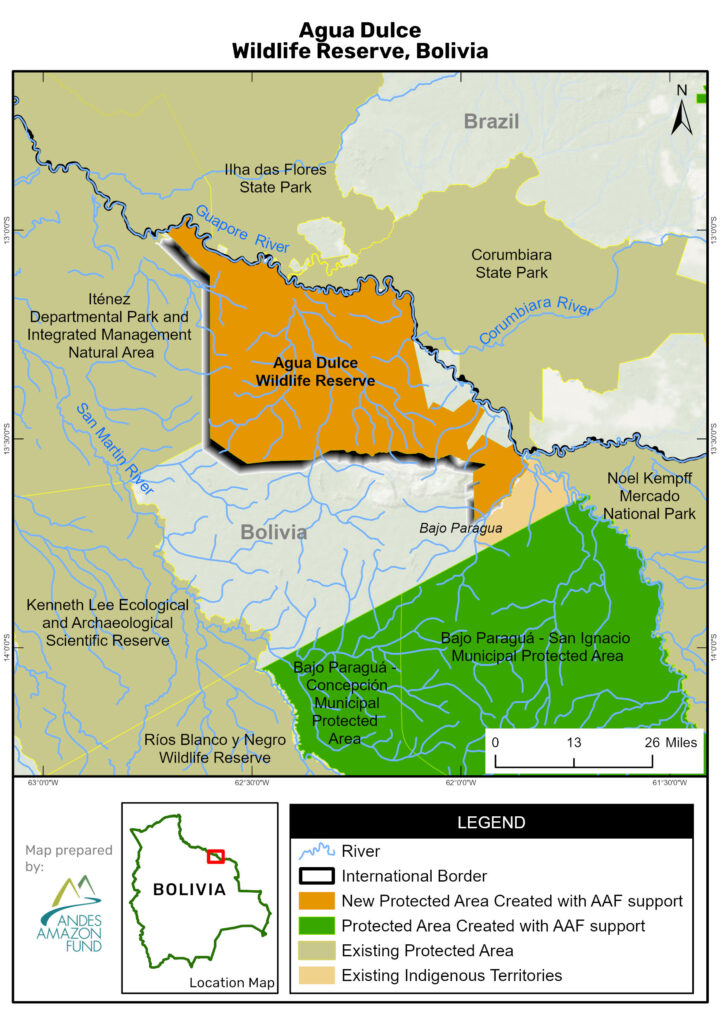
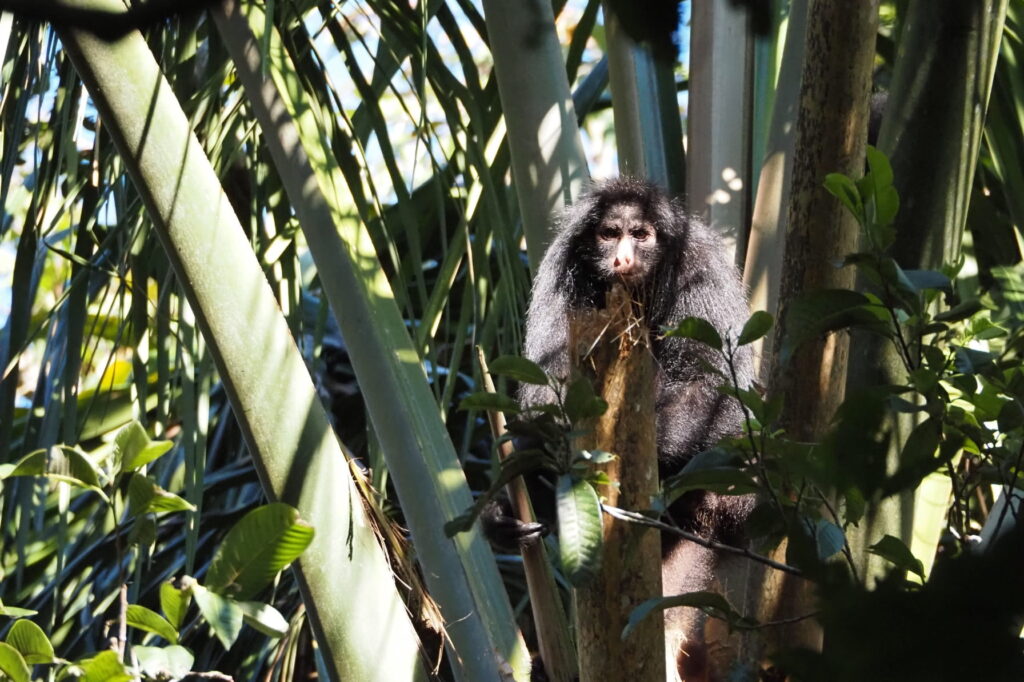
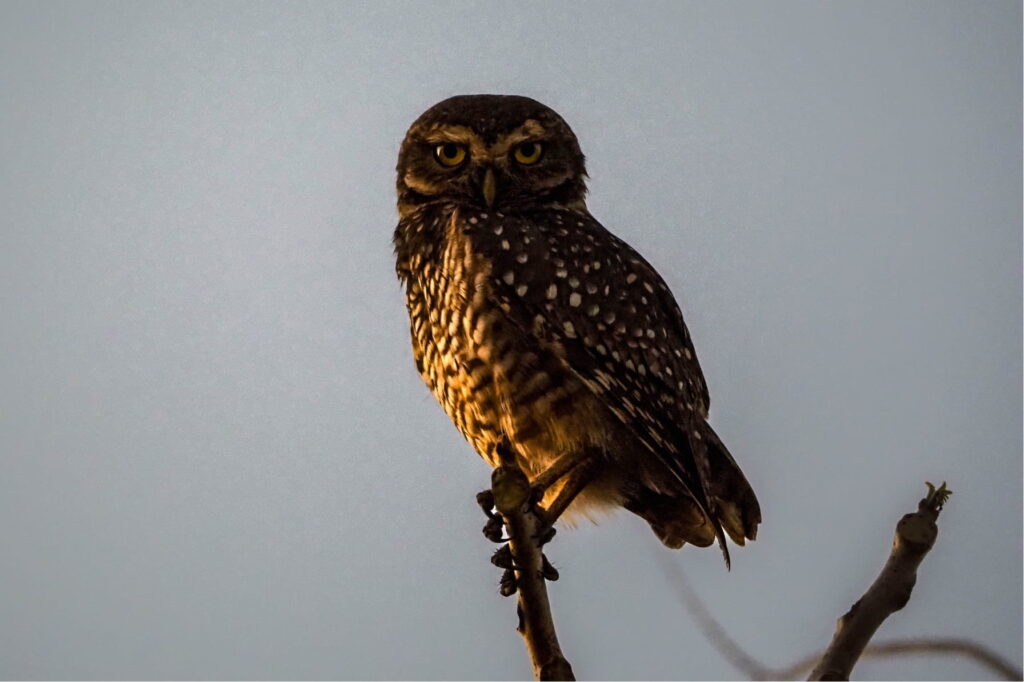
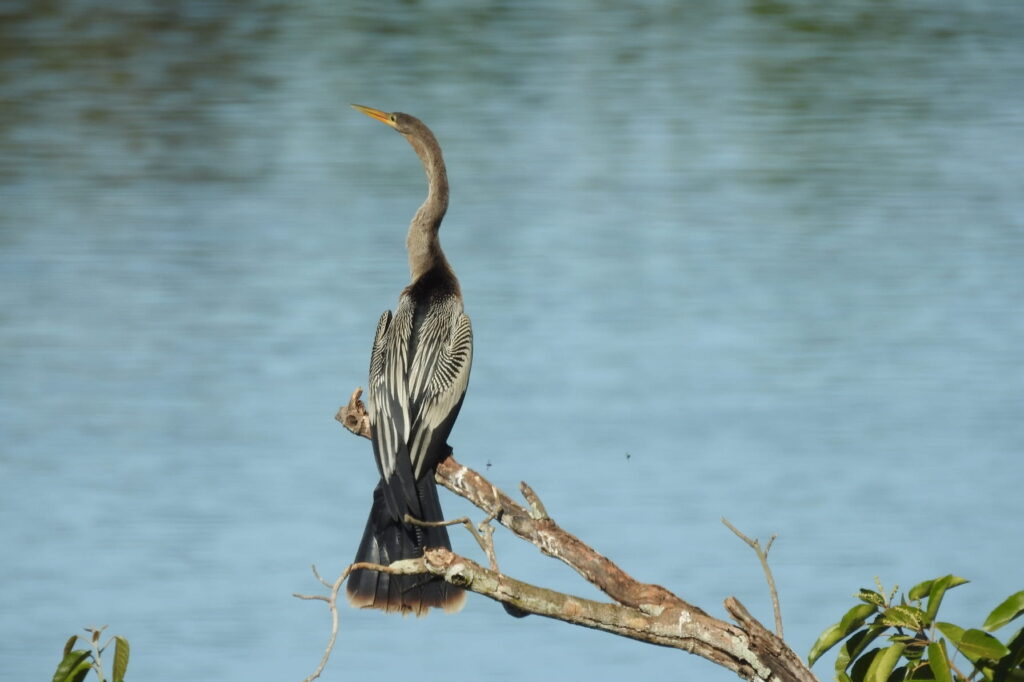
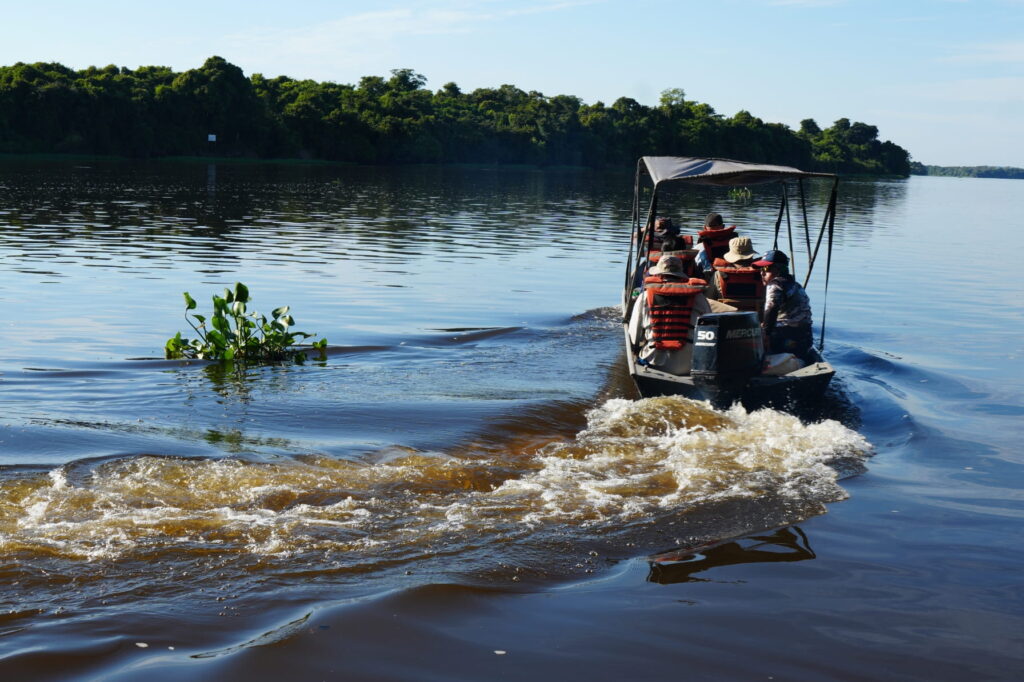
The area protects a mosaic of ecosystems at the transition zone between the Amazon and the Cerrado including lowland tropical forests and wetlands as well as a portion of the Iténez River. The Marimonos–Tres Picos mountain ranges and the floodplains of the Iténez River contribute to a high diversity of habitats and biodiversity within the new Municipal Wildlife Reserve. Over 300 fauna species have been identified within Agua Dulce including the endangered: black-faced black spider monkey (Ateles chamek), giant otter (Pteronura brasiliensis), and amburana (Amburana cearensis); the vulnerable: harpy eagle (Harpia harpyja), red-throated piping-guan (Pipile cujubi), dark-winged trumpeter (Psophia viridis), agami heron (Agamia agami), giant armadillo (Priodontes maximus), lowland tapir (Tapirus terrestris), giant anteater (Myrmecophaga tridactyla), marsh deer (Blastocerus dichotomus); and near threatened: jaguar (Panthera onca) and gallagher’s kentropyx (Kentropyx vanzoi).
Additionally, of the over 500 flora species documented within the Municipal Wildlife Reserve, there are 32 threatened species according to national inventories including the Vulnerable Spanish cedar (Cedrela odorata), allantoma (Allantoma pluriflora), and Brazil nut tree (Bertholletia excelsa).
By protecting vast wetlands and forests, the Agua Dulce Municipal Wildlife Reserve contributes to the livelihoods of over 1,200 residents living within and adjacent to its borders, including the communities of Remanso, Palermo, Puerto Villazón, and Puerto Rubio. The reserve’s terrestrial and aquatic ecosystems—especially along the Iténez River—provide these local populations with essential resources and food security through sustainable fishing, clean water, and other non-timber forest resources.
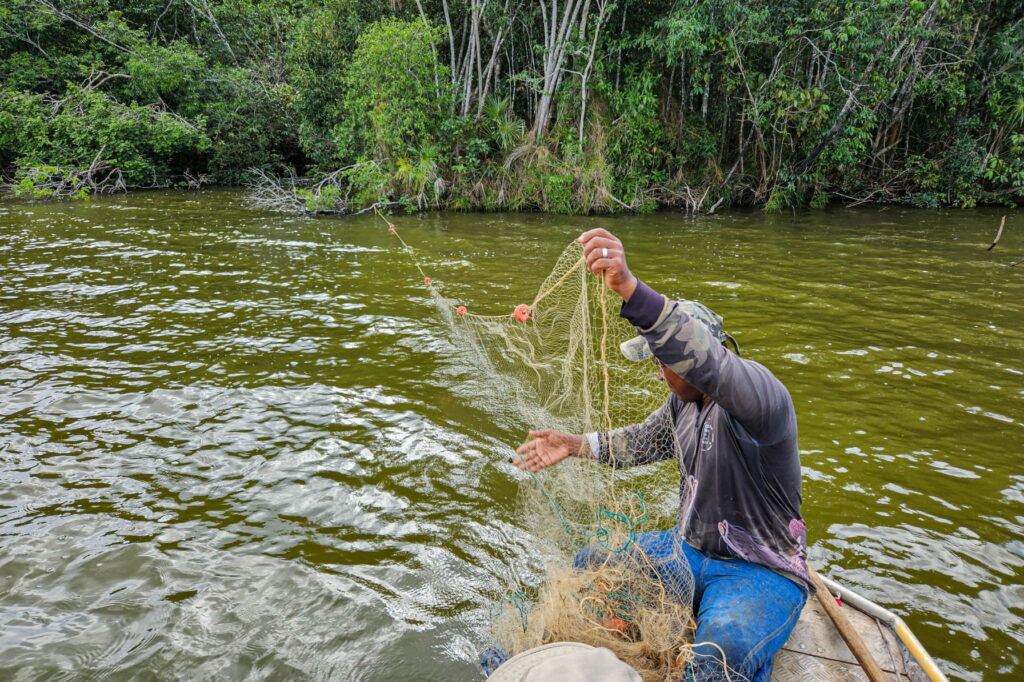
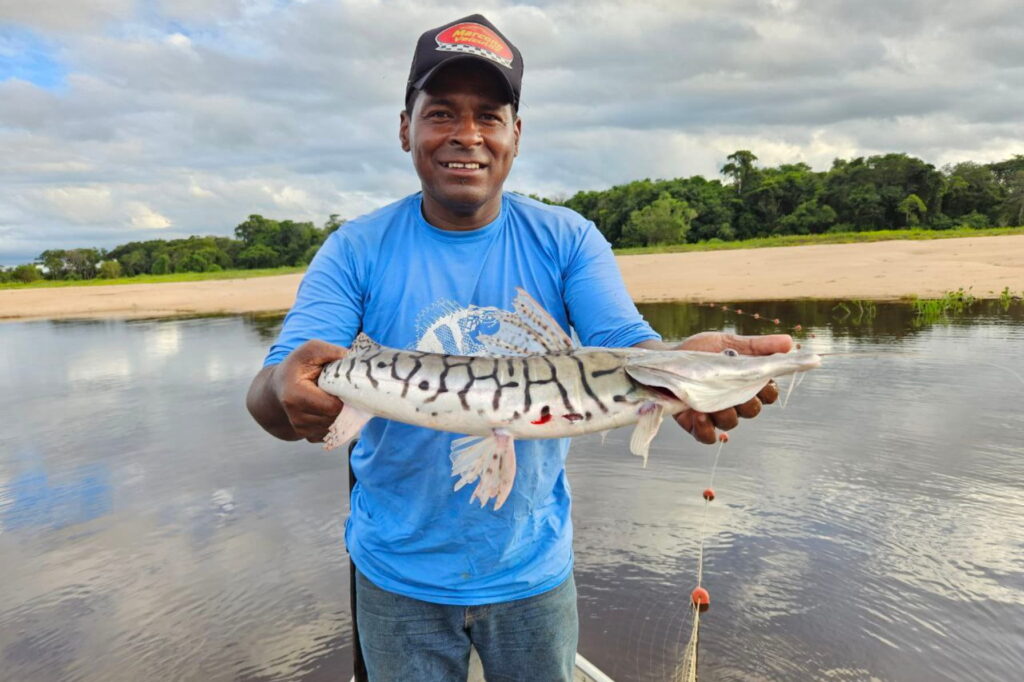
Ultimately, the reserve protects the natural flow of the Iténez River, ensuring the river and surrounding landscapes continue to sustain local communities while opening up new opportunities for sustainable, nature-based tourism.
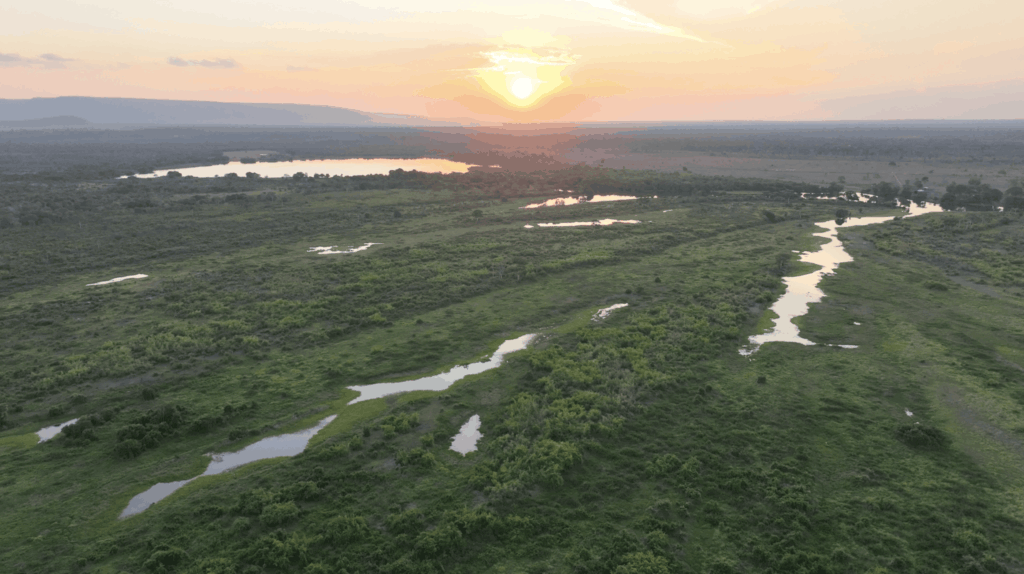
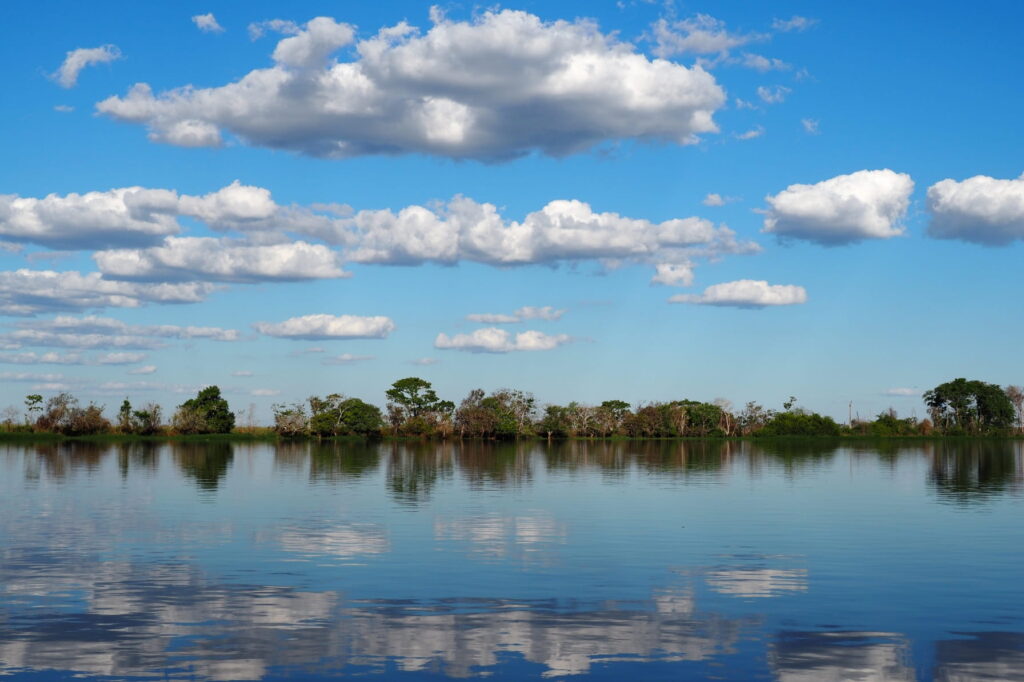
To combat rising threats in this corner of the Bolivian Amazon like forest fires, deforestation, and illegal mining, the newly established Municipal Wildlife Reserve will strengthen local management and environmental monitoring. “With the enactment of the creation of the new protected area, we are beginning to implement a management plan developed in close collaboration with local communities,” said Rosmery Ayala, Executive Director of Faunagua. This joint effort includes forming a management committee alongside the Baures government and local representatives to actively oversee and protect the territory.
Acknowledgements:
This achievement was made possible thanks to the Municipal Government of Baures, the District of Remanso, and local communities with technical support from Faunagua. Financial contributions were provided by Conserva Aves – Bolivia, Andes Amazon Fund, and Rainforest Trust.
MAKE AN IMPACT
Learn how we can make an impact in our world together. Donate or get involved by subscribing to our email list: