
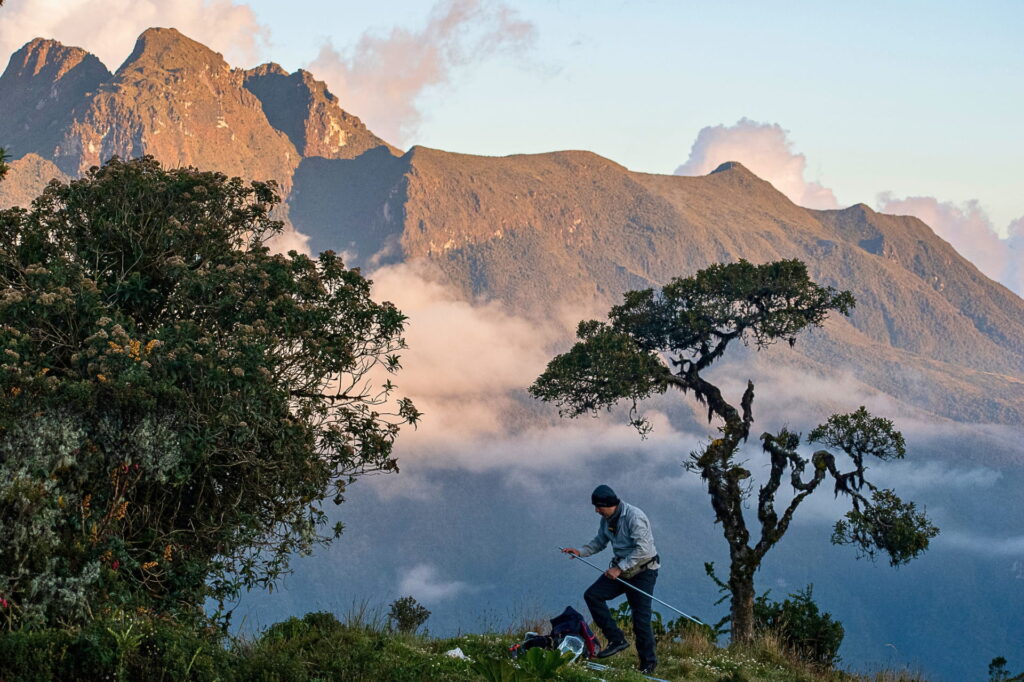
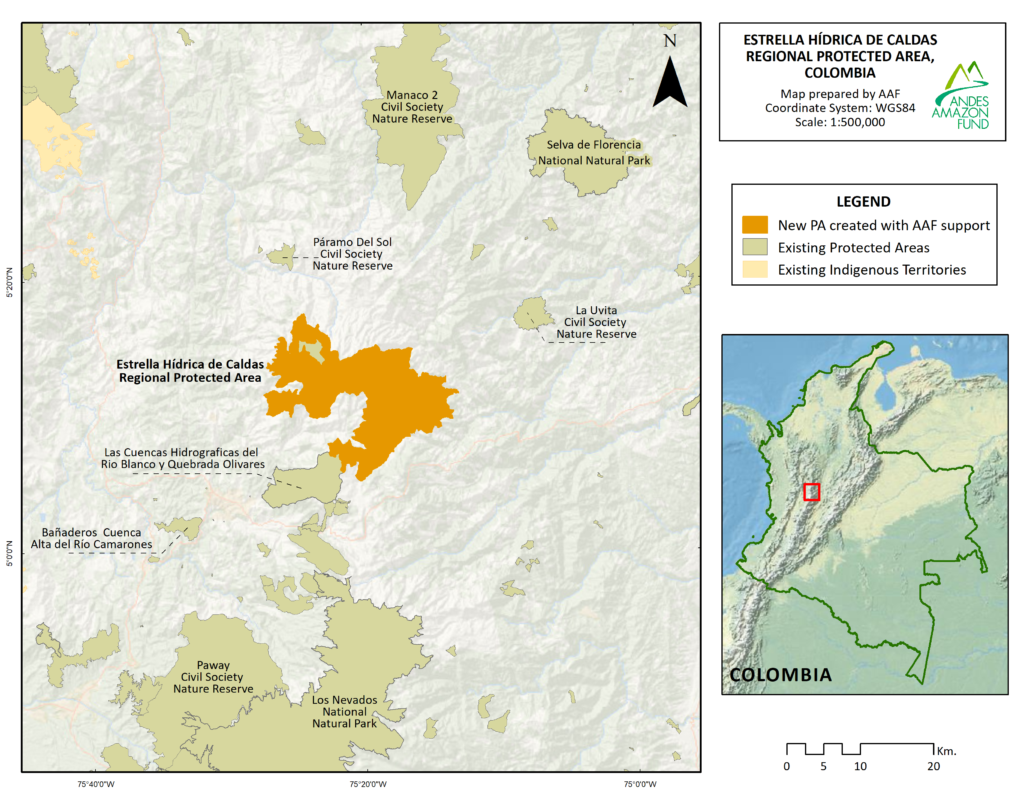
The Estrella Hídrica de Caldas Regional Protected Area spans 59,236 acres (23,972 hectares) of cloud forest, high-altitude grasslands, and wetlands in the department of Caldas, Colombia. Established on February 24, 2026, the area—which is the largest protected area in Caldas—plays a fundamental role in the regulation and provision of water for 5 municipalities. Additionally, its ecosystems cover a broad altitudinal gradient securing critical habitat for dozens of endangered species, including a newly recorded rain frog species in the genus Pristimantis.
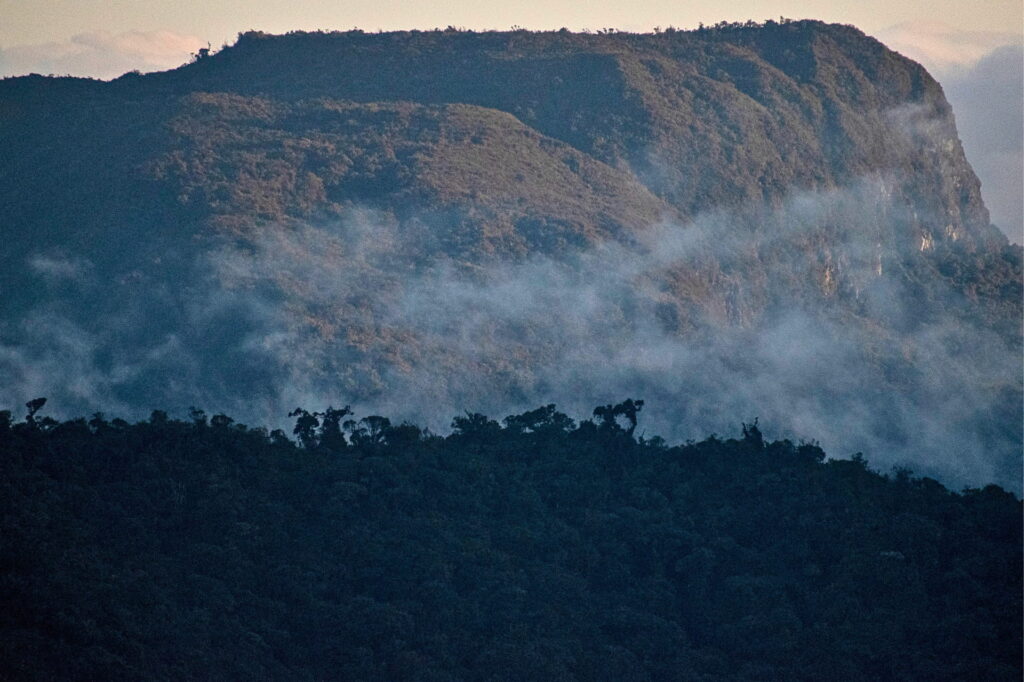
The new Regional Protected Area, categorized as a Distrito Regional de Manejo Integrado, in Spanish, is situated at the convergence of the Chinchiná and Tapias basins that drain into the Cauca and Guarinó Rivers—two of Colombia’s major river basins that join to form the Magdalena River—and helps to conserve water resources that benefit nearly 250,000 people downstream in the municipalities of Marulanda, Neira, Aránzazu, Salamina, and Manizales.
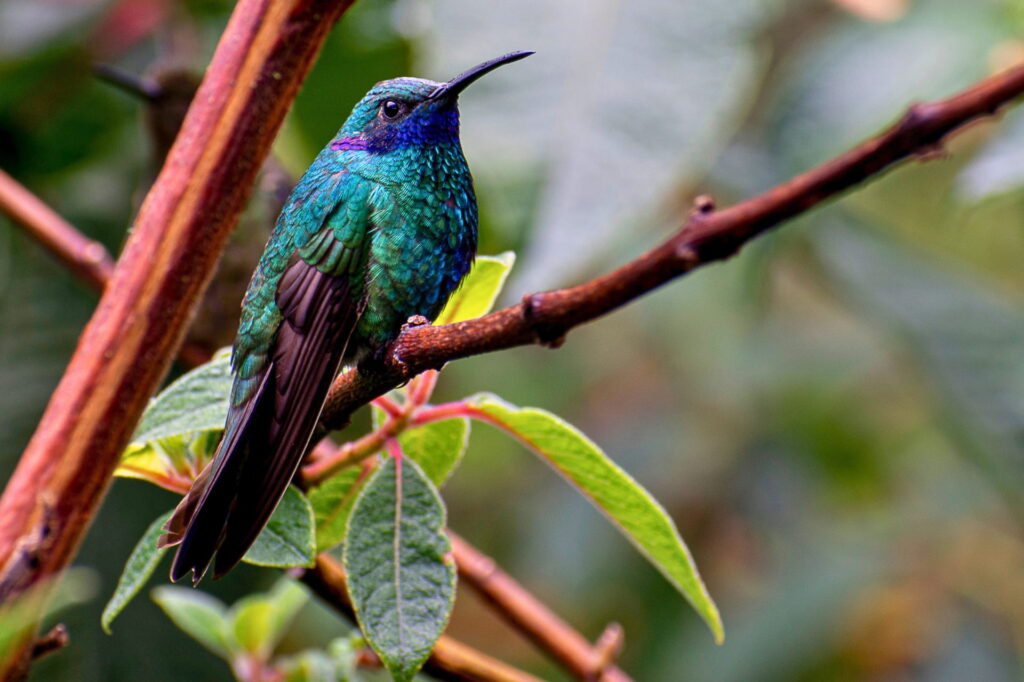
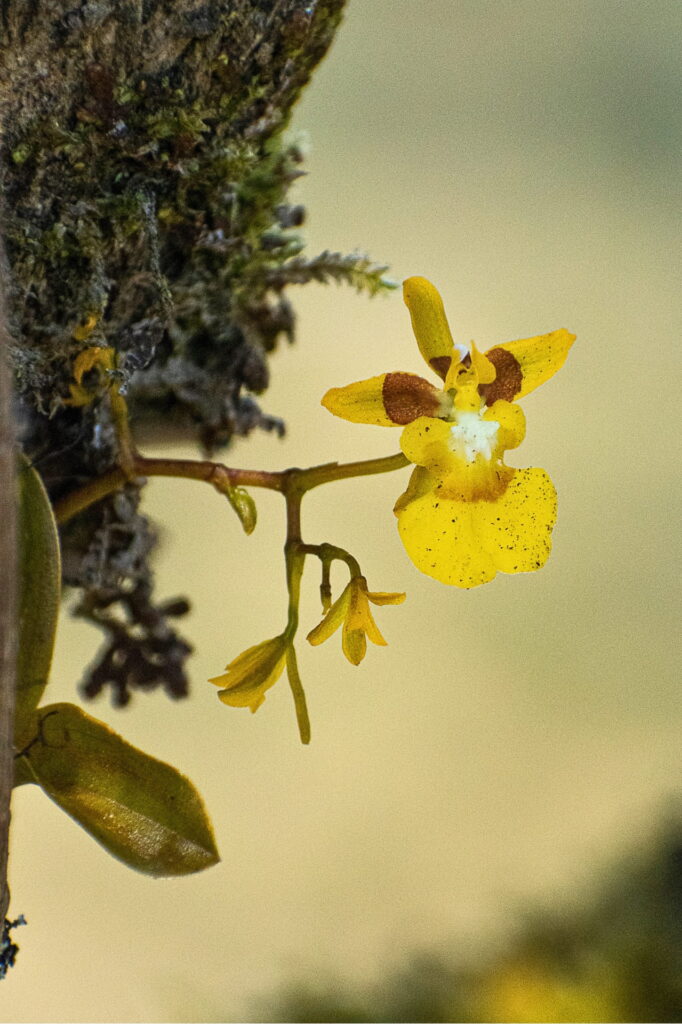
The area harbors important biodiversity, with 880 recorded fauna species—including 108 endemic species, 33 species classified as threatened by the International Union for the Conservation of Nature, and 89 species listed under the Convention on International Trade in Endangered Species of Wild Fauna and Flora. Among the most notable species is the Lepanthes cuatrecasasii orchid—found in only two locations worldwide.

The new Estrella Hídrica de Caldas Regional Protected Area encompasses native cloud and high-altitude forests which are some of the last remaining forest relicts in the Department of Caldas. The area contributes to ecological connectivity with existing protected areas such as the El Diamante and Las Cuencas Hidrográficas del Río Blanco y Quebrada Olivares Forest Reserves which enable connectivity with Los Nevados National Park.
Estrella Hídrica de Caldas is located within Colombia’s coffee cultural landscape recognized as a UNESCO World Heritage Site. The area’s establishment helps protect the region’s natural and cultural heritage. Many local communities surrounding the area still follow the tradition of using mules as transport.
The primary threats to biodiversity and water resources in the area are the expansion of agriculture into pristine natural areas which causes habitat fragmentation and pollution. With the declaration of the Regional Protected Area and the subsequent planning and implementation of management activities, threats to the area’s fragile ecosystems will be addressed in collaboration with local inhabitants.
Acknowledgements:
The establishment of the Estrella Hídrica de Caldas Regional Protected Area was made possible by the Departmental Government of Caldas and Corpocaldas with technical support from Instituto Humboldt, Más Biomas, and Nature and Culture International. Financial support was provided by Andes Amazon Fund and Re:Wild. Andes Amazon Fund’s financial support for this project was generously provided by the Wyss Foundation.
MAKE AN IMPACT
Learn how we can make an impact in our world together. Donate or get involved by subscribing to our email list: