
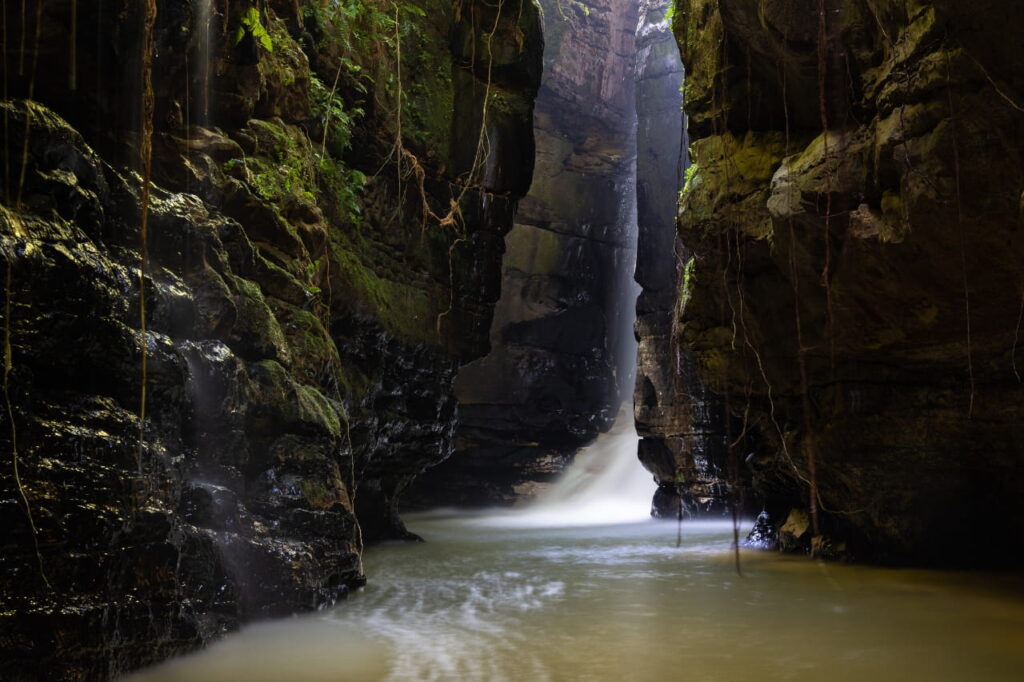
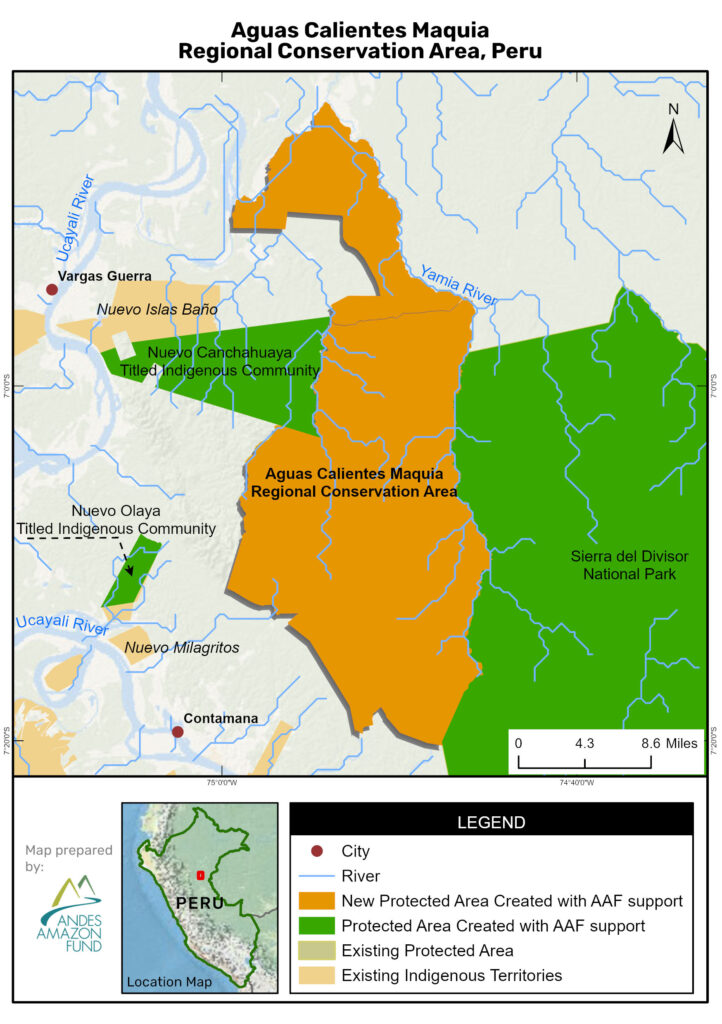
We are excited to announce that the Aguas Calientes Maquia Regional Conservation Area (RCA) was established on June 10th, 2026 after a process that was initiated in 2013 led by our partner Center for the Development of the Amazonian Indigenous People (CEDIA). The new protected area conserves 242,563 acres (98,162 hectares) of highly biodiverse Amazonian forests, wetlands, waterfalls and rivers that include unique hot springs and salt licks in Loreto, Peru.
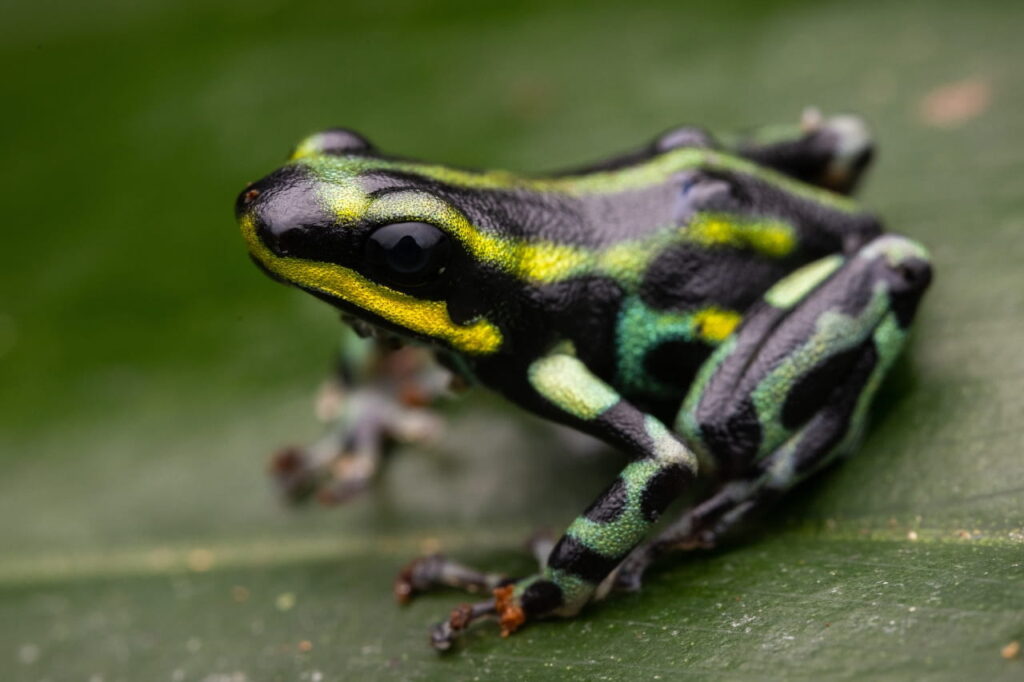
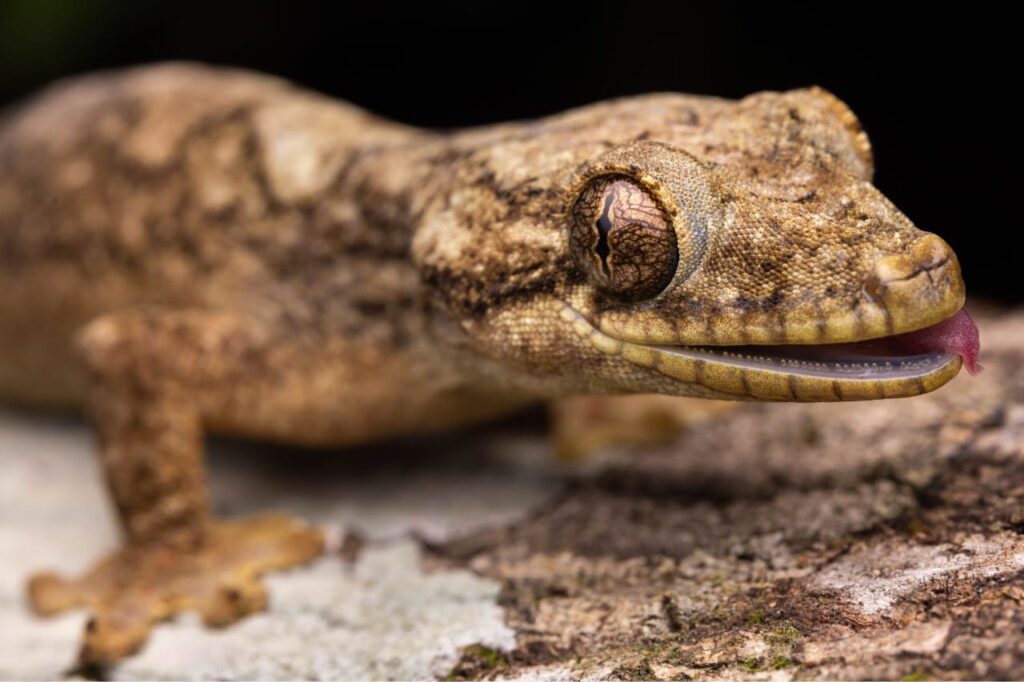
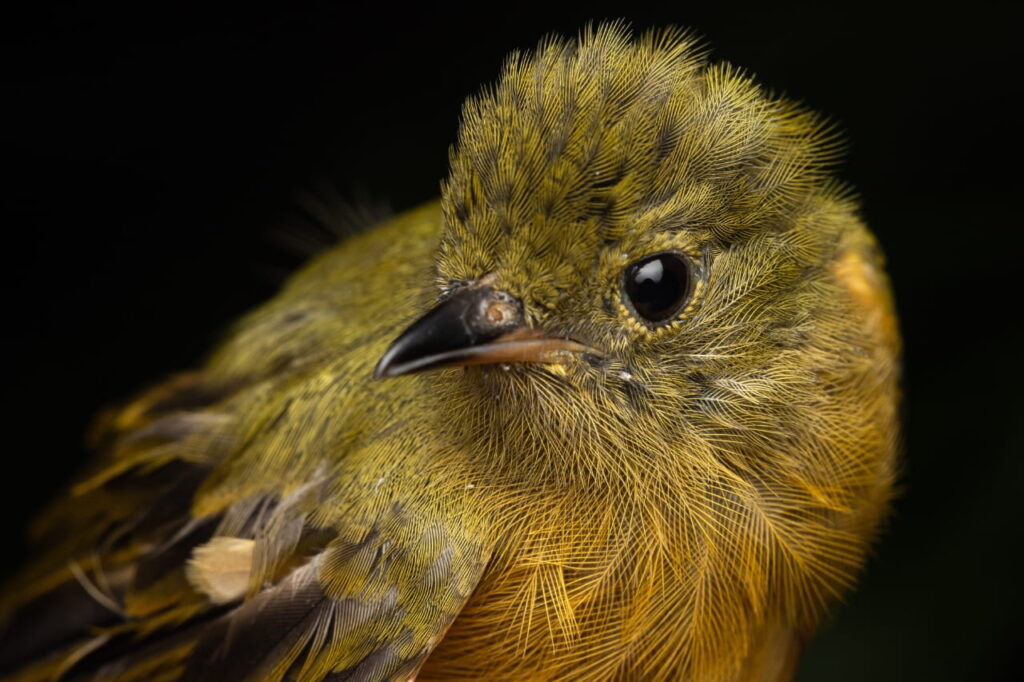
The area is home to countless Amazonian species including jaguars (Panthera onca), lowland tapirs (Tapirus terrestris), red-and-green macaws (Ara chloropterus), Endangered white-bellied spider monkeys (Ateles belzebuth), and Vulnerable Ucayali bald-headed uakaris (Cacajao calvus ucayalii), among many others. In total 979 species of flora and fauna have been scientifically documented in Aguas Calientes Maquia so far, including at least 20 endangered species.
The Maquía River and the Chunuya stream—the primary sources of drinking water for the city of Contamana—originate in the mountains of the newly established Aguas Calientes Maquia RCA. Conserving this territory helps guarantee water access for approximately 31,147 residents from Indigenous communities downstream.
According to Manuel Taricuarima Galan, from Nuevo Canchahuaya and vice president of the Association of Five United Villages, “The creation of the Regional Conservation Area is very important to us because it is the headwaters of our streams. We rely on its resources and also its hot springs and beautiful waterfalls.” The Nuevo Canchahuaya Indigenous community played a pivotal role in the RCA’s creation process by voicing their approval during the Prior Consultation process.
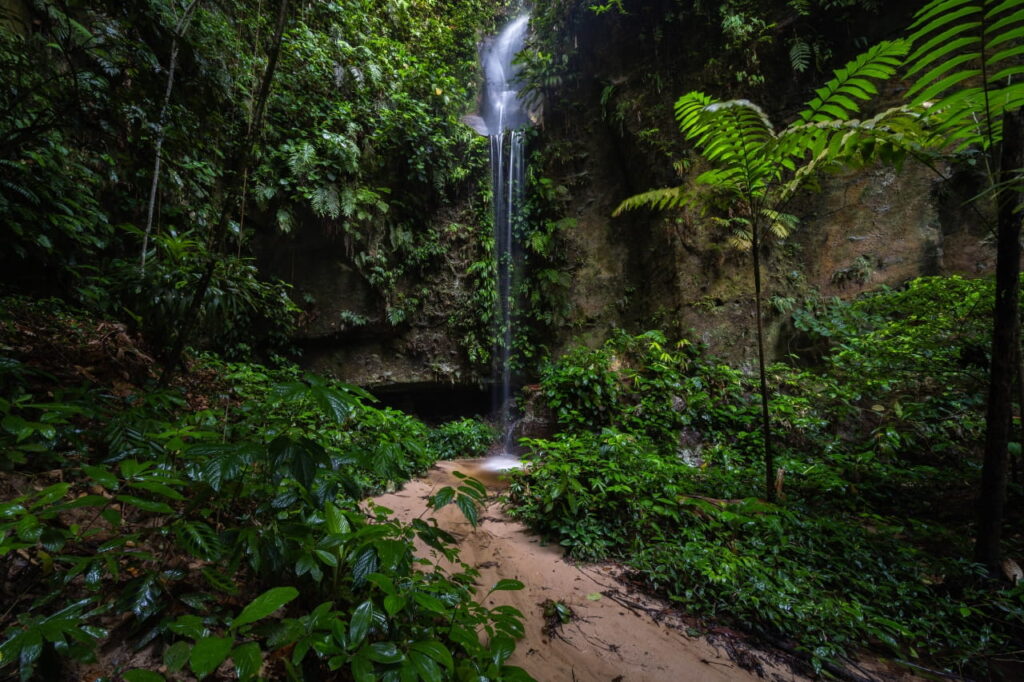
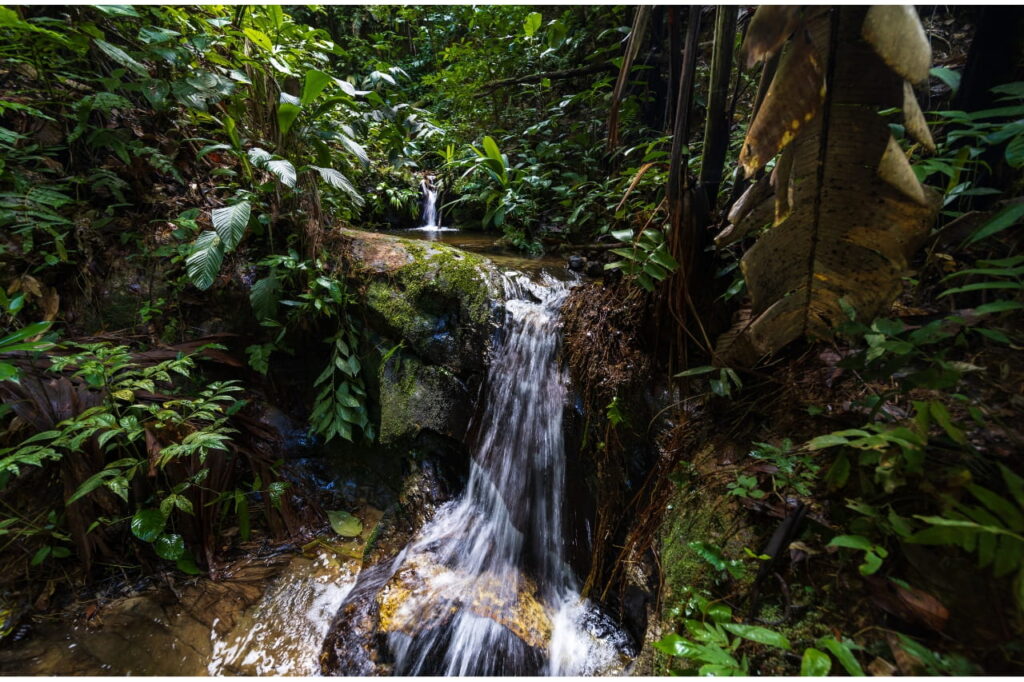
Aguas Calientes Maquia is adjacent to the Sierra del Divisor National Park and overlaps with a portion of the Sierra Del Divisor Occidental Indigenous Reserve, strengthening protection for Indigenous Peoples in voluntary isolation and initial contact. The majority of the RCA’s zoning comprises the strictest level of protection, making those ecosystems completely off limits, with the aim to provide a safe refuge for the isolated Remo (Isconahua), the Mayoruna (Matsé and Matís), and the Kapanawa peoples.
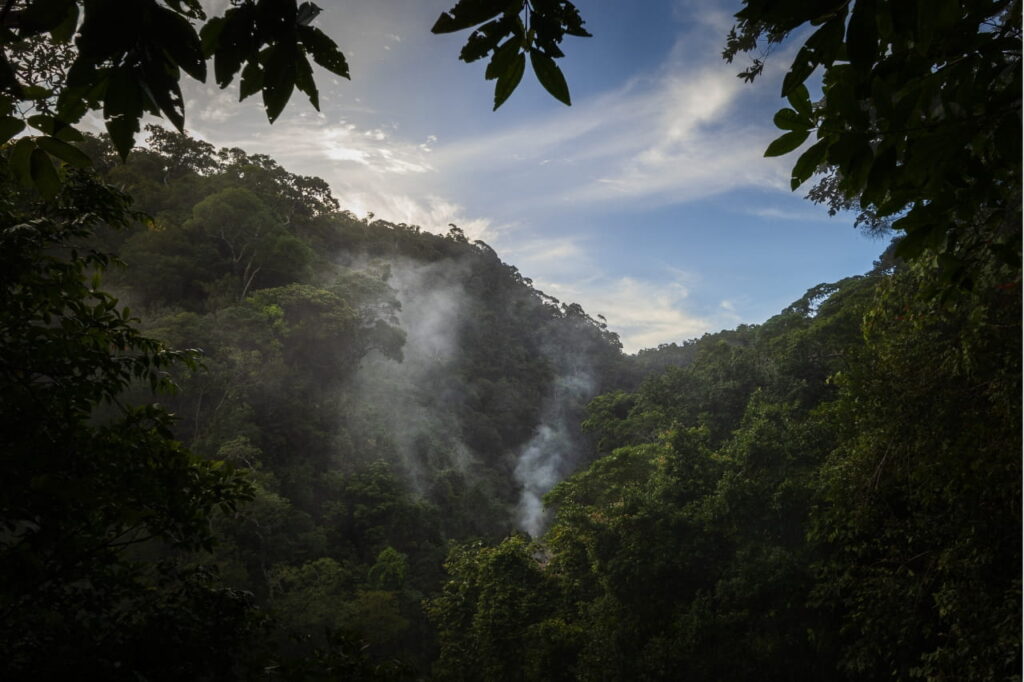
The most accessible portion of the RCA, far from the strict protection zone, boasts numerous ecotourism attractions. Hundreds of macaws and individuals of other species gather at salt licks, creating a rare opportunity to spot wildlife, while hot springs—rich in sulfates, sulfur, and fluorides—emerge from the subsoil at near-boiling temperatures. These springs are highly valued for their therapeutic properties by both local communities and visitors.
Acknowledgements:
Over the years, the creation process has been supported by the Center for the Development of the Amazonian Indigenous People (CEDIA) and was made possible by the Regional Government of Loreto and Organización Regional Aidesep Ucayali – ORAU. It has also received financial support from the Wyss Foundation and Art into Acres via Andes Amazon Fund, Rainforest Trust, Re:wild, Conservation International, as well as technical assistance from Peru’s National Protected Area Service – SERNANP, Peru’s Ministry of the Environment – MINAM, and the Peruvian Society for Environmental Law (SPDA).
MAKE AN IMPACT
Learn how we can make an impact in our world together. Donate or get involved by subscribing to our email list: